Metro Vision Lens Design
Metro Vision Lens Design
From everyday single vision lenses to advanced digital progressives, Metro Vision Detroit offers cutting‑edge optical solutions designed for clarity, comfort, and lifestyle. Our experts match your unique vision needs with the right lens design, ensuring you see and look your best.
Photo
Modern Lens Options
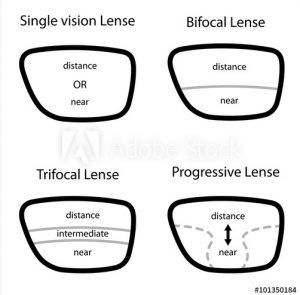
Single Vision Lenses — This all‑purpose solution, single vision lenses correct one focal length—distance or near. Whether you need sharp vision while driving or clear focus for reading, these lenses provide simplicity and affordability. Available in many materials and compatible with protective coatings, single vision remains the most widely prescribed option.
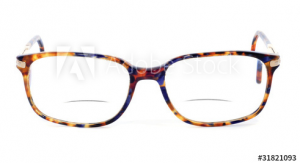
Multifocal Lenses — When patients need both distance and near correction in one lens, multifocals provide a convenient solution. Instead of juggling two pairs of glasses, multifocals combine prescriptions into a seamless experience. Perfect for adults developing presbyopia, they ensure visual comfort throughout the day.
No‑Line Progressives — A breakthrough in lens design, progressives offer a smooth, invisible transition between far, intermediate, and near vision zones. Progressives allow you to drive, check your dashboard, and read a menu without switching eyewear. With no visible lines, they look like single vision lenses but deliver the function of three prescriptions in one.
Bifocals — A classic option that provides clear distance vision with a defined near‑vision segment. While the dividing line is visible, bifocals remain reliable and cost‑effective. Many patients appreciate their simplicity and dedicated reading zone.
Trifocals — Offering distance, intermediate, and near correction, trifocals are divided into three sections. They function similarly to progressives but with visible lines. Though less common today, trifocals still benefit those who prefer distinct separation between fields of vision.
Thin Lenses — High‑index technology reduces thickness and weight, making eyewear lighter, more stylish, and more comfortable. Ultra‑thin lenses eliminate the “thick glasses” look of strong prescriptions, allowing patients to enjoy bold designer frames from Gucci, Ray‑Ban, and Armani with confidence.
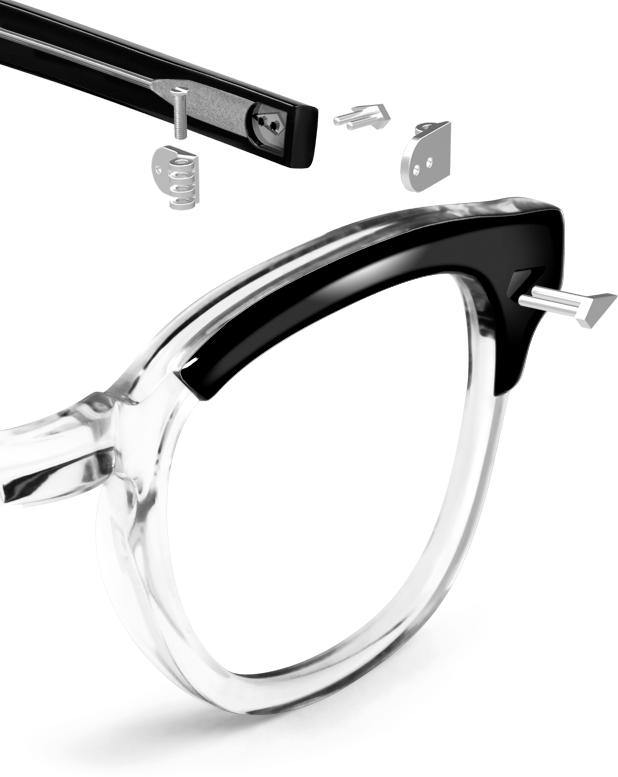
Lens Designs at Metro Vision
Lens Design for Lifestyle
Your lifestyle dictates your visual needs. At Metro Vision, we align eyewear design with your daily routines, hobbies, and professional activities:
• For professionals: Computer‑specific lenses with blue‑light protection reduce fatigue and increase productivity.
• For athletes: Impact‑resistant polycarbonate lenses with anti‑fog and contrast tints provide safety and clarity.
• For outdoor enthusiasts: Polarized prescription sunglasses cut glare on the water, road, or slopes.
• For children: Durable, lightweight lenses keep up with active lifestyles and protect developing vision.
• For fashion seekers: Thin lenses enable trendy designer frames without bulk or distortion.
Lens customization extends beyond vision correction. With color tints, mirrored finishes, and gradient shades, lenses can be as much a fashion accessory as a medical device.
[PHOTO PLACEHOLDER 3: Lifestyle photo – professional at computer with blue‑light lenses]
Technology and Customization
Optical technology has advanced dramatically in the last 20 years. Today’s freeform digital lenses are customized for each patient’s prescription, frame choice, and facial measurements. Unlike mass‑produced lenses, digital designs account for pupil distance, head posture, and natural eye movements. The result: sharper vision, less distortion, and enhanced comfort.
Modern coatings transform eyewear performance. Anti‑reflective layers eliminate glare from headlights and screens, hydrophobic coatings repel water, oleophobic coatings resist smudges, and blue‑light filters improve comfort during digital use. UV‑blocking materials provide lifelong eye health protection.
[PHOTO PLACEHOLDER 4: Close‑up of progressive lens diagram showing vision zones]
A Brief History of Optical Lens Design
The history of lenses reveals centuries of innovation. The first wearable spectacles appeared in Italy in the late 13th century, designed with simple convex glass to magnify text. These primitive reading aids were reserved for scholars and monks. By the 15th century, riveted spectacles spread across Europe, meeting the needs of an increasingly literate population.
Benjamin Franklin introduced bifocals in the 18th century, combining distance and reading correction in a single frame. This innovation was revolutionary for those who previously switched glasses constantly. During the 19th century, advances in glass grinding and mass production made eyewear more widely available.
The 20th century ushered in plastics, coatings, and lightweight materials. Progressive lenses in the 1950s eliminated the visible line of bifocals, while high‑index plastics in the late 20th century reduced lens thickness. The 21st century introduced freeform digital technology, creating lenses tailored to each wearer’s unique vision profile.
From quartz magnifiers to digitally crafted progressives, the history of optical lens design reflects an unending pursuit of sharper vision and improved quality of life.
Visit Metro Vision In Clinton Township
Lens design is where science meets style. Metro Vision Detroit provides single vision, multifocals, progressives, bifocals, trifocals, and thin lens options to suit every lifestyle. With cutting‑edge digital customization, advanced coatings, and designer frames, we ensure that every pair of glasses offers clarity, comfort, and confidence. Visit us at 39087 Garfield Road in Clinton Township to discover eyewear designed for your life.
Ready to see the difference? Book your eye exam today and explore our designer eyewear gallery, featuring Gucci,…